For part 2 of my reflections on India I’d like to talk about my experience of men during my visit and also of my experience with women, or lack there of. This I feel ties into the Caste system and the different way women are treated depending on their Caste and on prevailing Gender attitudes.
My experience and my thoughts on this were cumulative, it wasn’t immediately obvious but something that you start to be aware of, then it becomes blindingly obvious.
I am also only speaking of my personal experience, I do not have an extensive knowledge of the Caste System or Gender Politics in India.
I learnt some things whilst in India and from further reading and research.
On my arrival in India, all of the security staff and the staff at the phone SIM counter were all male. I had arranged to be picked up, my driver was male.
On arriving at my hotel, all of the staff I met were male. At breakfast the following day, again all the staff were male, I did meet the owner who was a lovely lady, who chatted to me for a short while, she used to live in England.
My first outing was to an area called Khan Market, which was close to the hotel and was pretty upscale, I did see some women, mainly western white women shopping. There were a couple of women working in the bank and in a few of the shops, but not really that many. To be fair I didn’t notice this straight away, it was only after walking around for a bit I realised how few females were around. I was approached a couple of times asking if I wanted a Tuk Tuk or asking where I was going.
During the next couple of days and on my various excursions around Delhi this pattern was repeated, very few women around, not in shops or restaurants, not on the streets unless less they were sweeping or begging. This was particularly prevalent in the middle of Delhi and away from the upscale areas.
During my walk through Chandni Chowk Market and the spice market, you barely see any Indian women, again they are not working in the market, on the stalls, in the shops, the restaurants.
When I moved to the hotel to start my Tour the area was extremely busy, lots of hotels, shops etc but again no women.
My hotel was again staffed entirely by men.
I went for a little walk from the hotel and got approached almost immediately. A man stating that he was from my hotel, asked where I was going? I said to look at the shops, he told me the shops weren’t open until later and asked a Tuk Tuk driver, who had been following me to take me to a ‘Shopping Market’ I agreed (stupidly) the Tuk Tuk cost very little so it didn’t seem a big deal. He took me to a bloody Tourist Market, full of people selling tourist tat, but high end and very expensive. Clearly this was a scam the driver and the other guy get kick backs to take you there.
This sort of shit happened ALL the time, pretty much every time I walked anywhere alone. Frustrating and annoying but also potentially dangerous.
This was my experience throughout my stay, being hassled and approached continuously. For the younger women in our group things were even worse.
Whilst I didn’t always feel particularly threatened, it is disturbing and a constant source of irritation.
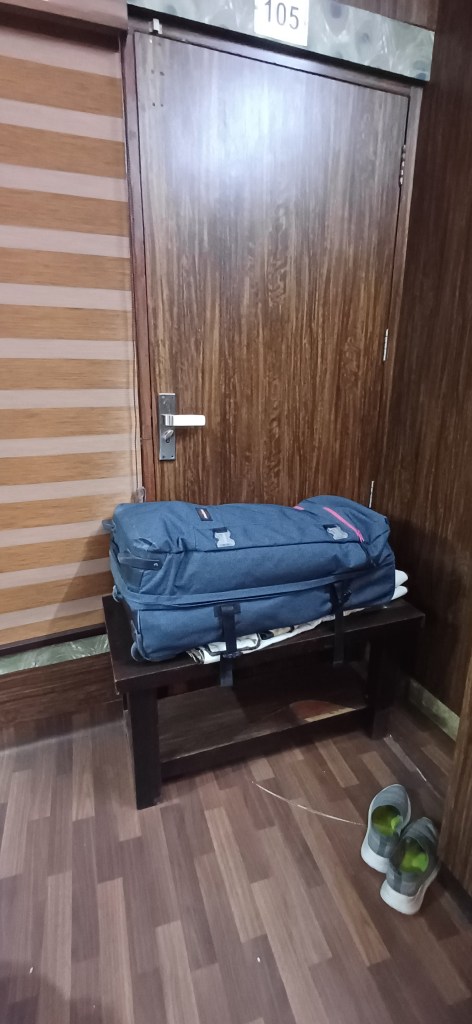
I did however feel unsafe and vulnerable during my stay at the last hotel in Delhi, again all male staff, all male guests a few of whom were drunk, the staff were not very welcoming or helpful. I felt the need to barricade my door with a huge wooden table and my suitcase. Not good.
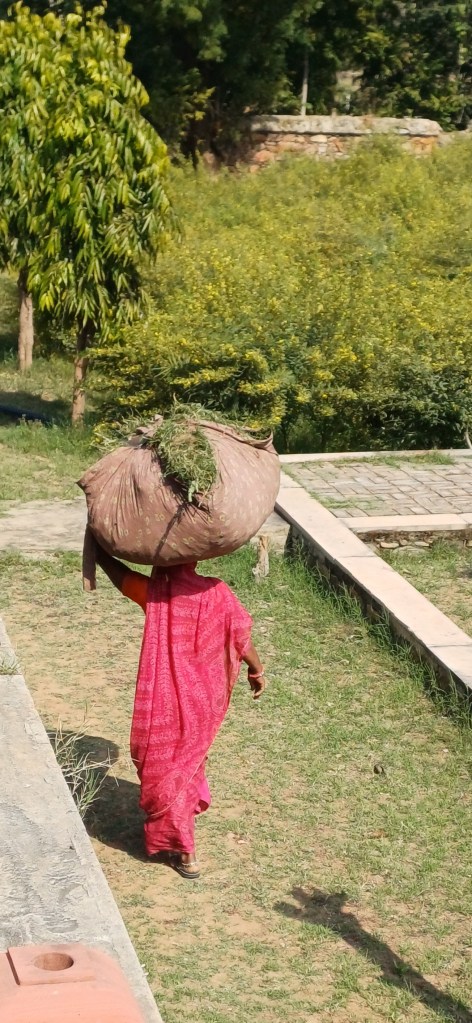
Everywhere I went, in Delhi, Jaipur, Agra, Alipura, the cities and also in the villages women are very scarce.
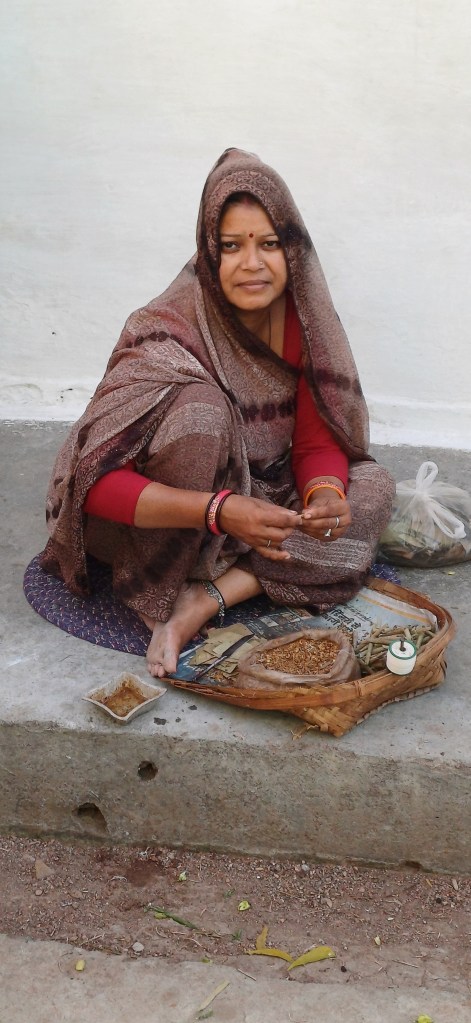
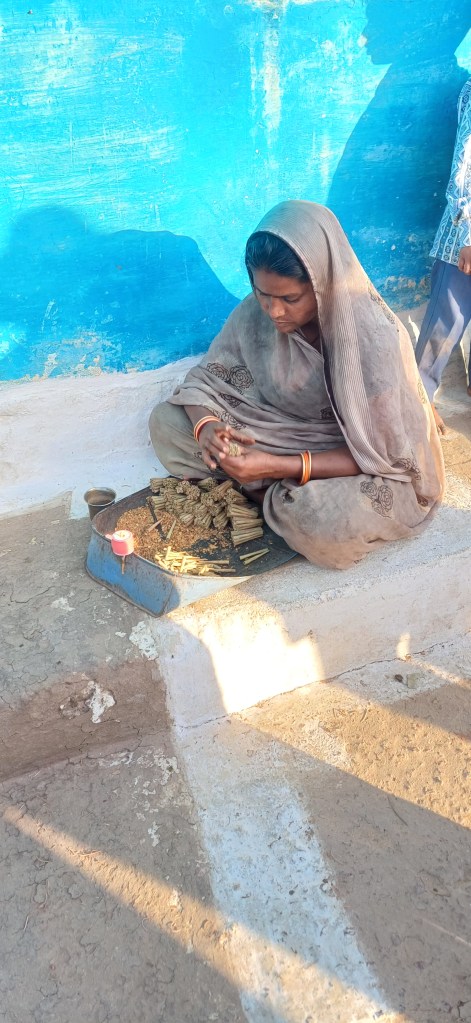
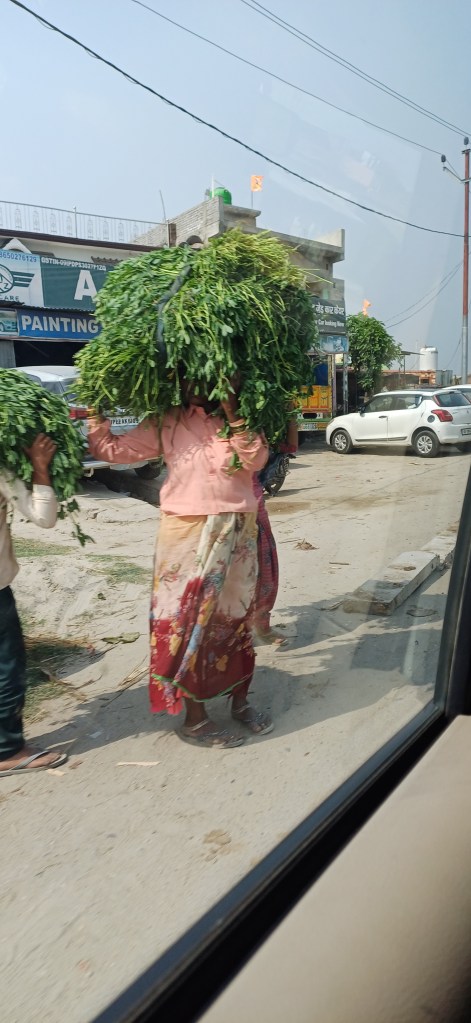
On our village walks, we saw some women, mainly in their homes, or doing chores, making dung patties, making cigarettes, minding children but they were in the background. It was the men on the streets, sitting outside the cafes chatting playing cards, the children we met were a mix of boys and girls but older girls and women were hard to find.
We did encounter a few more women in Varanasi, this was because they were traveling as families for the Shiva Festival or from the Kumbh Mela Festival.
But In the back streets it was the same, very few women.
It’s strange because once you become aware of it, it starts to be so obvious.
India still has a big problem with sexual violence, domestic violence and rape, particularly in the more rural areas. Women continue to be the victims of these crimes on an alarming scale.
Vikram, our group leader was a wonderful guy who is rightly proud of his country and that came across when he spoke to us about the history, the culture, the religions and everything in between!
Vikram explained that the caste system no longer prevents people from achieving their potential and that it is illegal to discriminate on the basis of caste. This is a huge positive step and highlights that things are certainly moving in the right direction.
My thoughts are that things for people and more specifically women in the higher castes are improving, I’m not quite so sure this is the case for the lower castes and the women in poor and more rural communities.
Vikram talked about his experience of women in his family and social circle who have well paid, high profile, high status roles. However these women are from wealthy, high status families, they have had access to education and opportunities that others do not. The gap between the rich & the poor is huge, this gap widens considerably when you factor in Gender.
I spent a month in India, during that time my interactions with Indian females was severely limited.
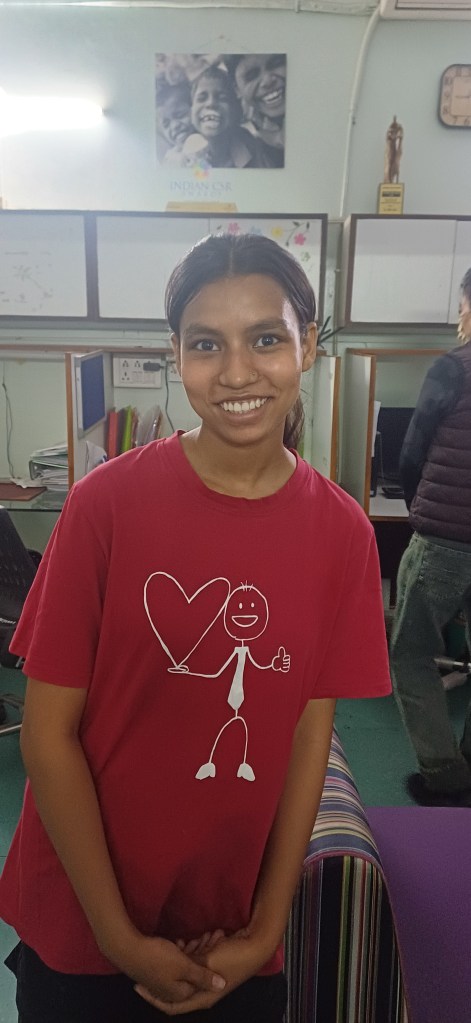
I had 2 proper conversations with women, both of whom I met whilst traveling on planes, one on the way to Varanasi and one on my flight to Bangkok. I chatted to the young girl who took us in our City Walk in Delhi, Kajahl. That was it.
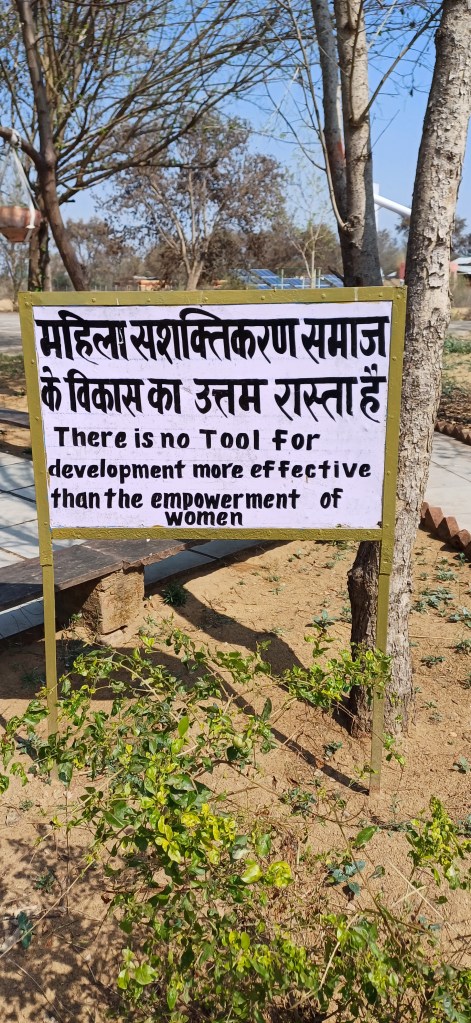
As I’ve said I think India has a way to go in terms of Gender Equality, it takes more than Government policies and Laws, it needs a shift in attitudes and most importantly access to education for all young people particularly Girls.
Although I found things difficult at times and attitudes towards women challenging. I also feel hopeful that things are changing, attitudes are improving and women are starting to make their voices heard.
The current President of India is a women, Droupadi Murmu. Her family were farmers. Droupadi Murmu has spent her life trying to empower the downtrodden and more marginalised sections of society.
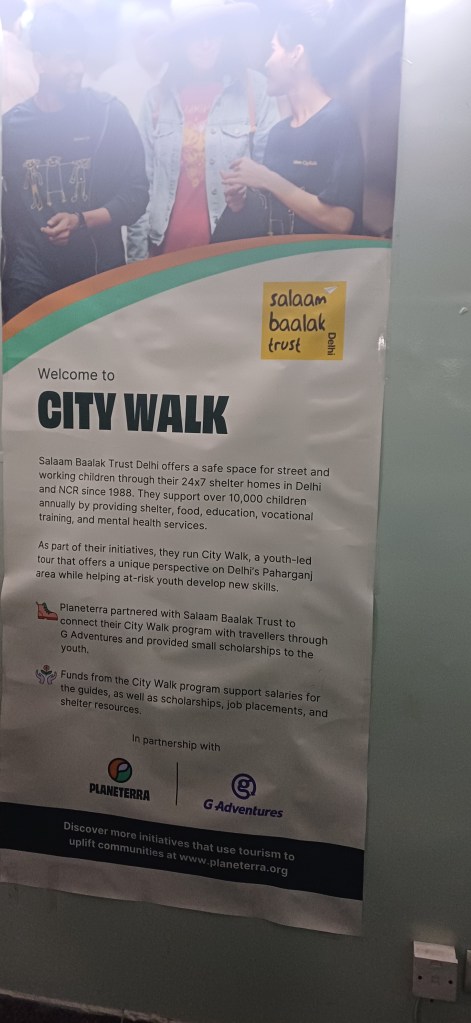
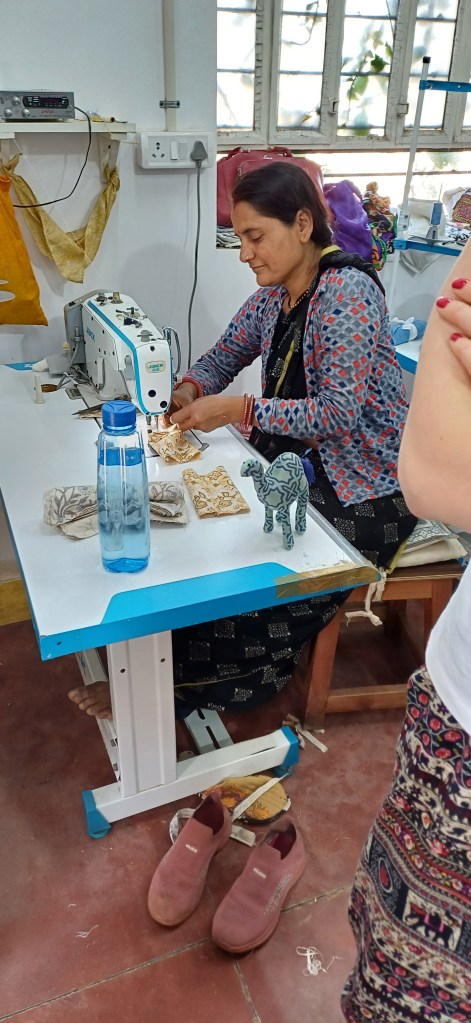
Whilst on my tour I was lucky enough to visit 3 different projects devoted to improving the life of women and children, in the cities and in rural communities, supporting their access to education, employment and financial independence.
- The Salaam Balkan Trust. Who help and support street children in Delhi.
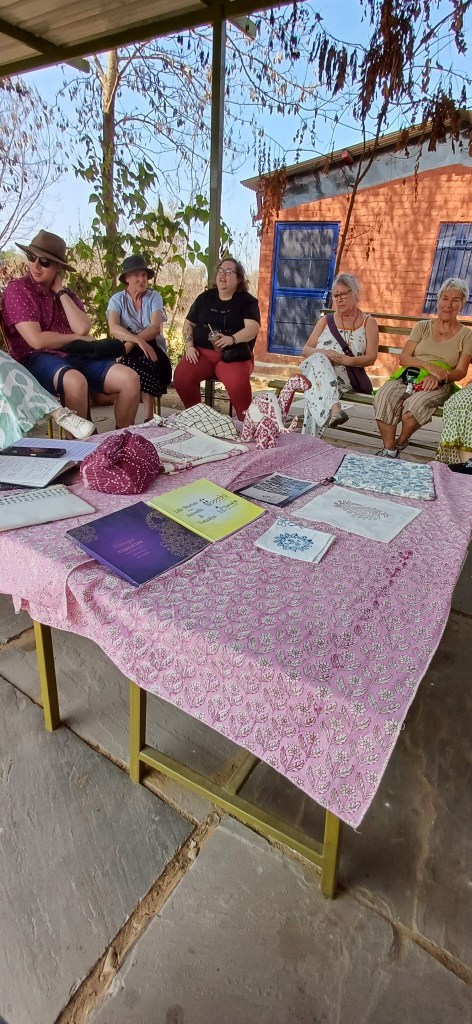
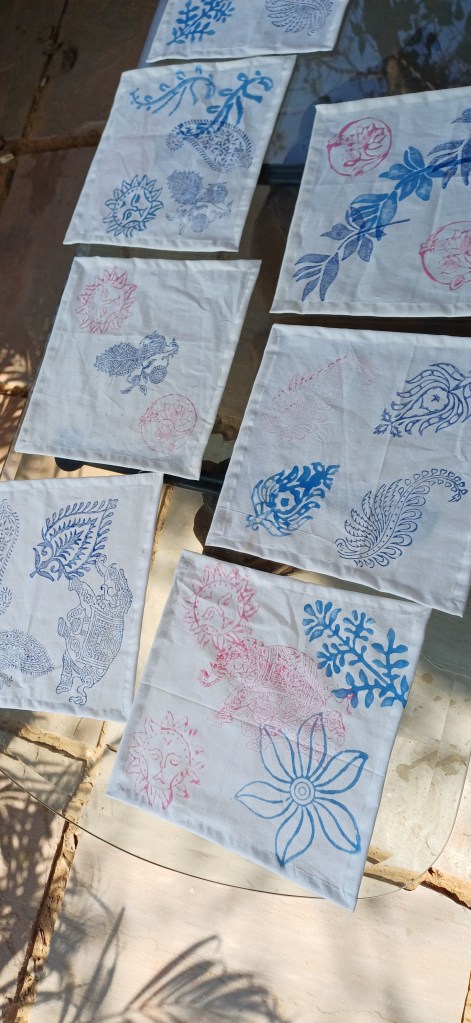
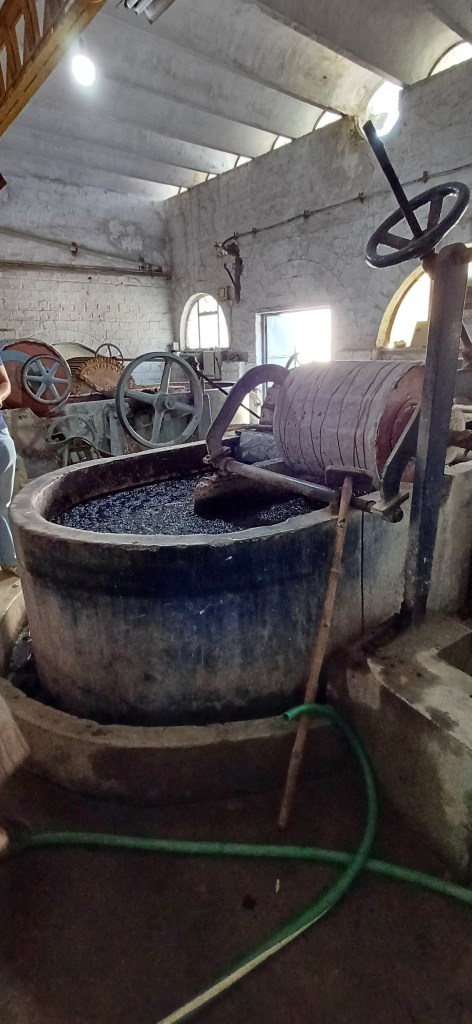
- Anoothi Block Printing Project. Supporting women from marginalised communities.
- TARAgram. A project supporting tribal women making paper items from recycled clothing.
- Women with Wheels. Offering livelihoods to women in a sector usually denied to women. They operate in Delhi & Jaipur.
There are many more projects operating throughout India. G Adventures who I did my tour with have a charitable arm called Planeterra who support all of these projects.
I think it’s important to acknowledge that India is not alone in its attitudes towards women and women’s rights. It was more visible and obvious but that doesn’t necessarily mean it’s worse than other countries
You only have to look at the current situation in America to see that the rights that women have fought so incredibly hard for over the last century are under attack.
No country has managed to achieve Gender Equality, not one!
The Patriarchy is alive and well.
We need to continue to fight and advocate for women’s equality in Social, economic and political terms.
Everyone should be treated with respect and dignity, everyone should be treated equally, fairly and with equal and equitable access to resources regardless of their race, religion, gender or sexuality.
If we continue to build society’s that fight for the opposite of this, then we all lose.

 Hereandthereclaire.com